Shaping the Future of a B2B Content Experience Platform
Uberflip was a content experience platform that enabled B2B marketers to deliver personalized content experiences at scale. It allowed them to centralize and organize content, craft curated experiences for specific audiences, and analyze and optimize campaign performance.
However, years of technical debt, a lengthy onboarding and enablement process, and fierce competition were presenting challenges for the business. Marketers wanted faster time to value, the ability to build and iterate on experiences without depending on an enablement team, and more control over their output.
Company
Uberflip (Acquired by PathFactory)
Positions
Product Design Lead,
Director of Product Design
Years
2022 – 2025

My role
I was brought on to help modernize a platform weighed down by years of technical debt and failed past initiatives. Over the next 2.5 years, as Lead Product Designer and later Director of Product Design, I worked closely with the VP of Product to shape the future vision of the platform, interviewed 28+ B2B marketers, led the design and launch of Uberflip Pages, and built out the design practice through repeatable processes and a lightweight design system.
Results
109
Active accounts using Uberflip Pages
~$6M ARR
Represented by Uberflip Pages adopters
2
At-risk customer saves directly attributed to Pages
78
Average SUS score during Alpha and Beta rollout
Establishing design foundations
When I joined, the design team operated without a shared process. Designers worked directly with PMs, jumping into solutions before problems were fully understood, and engineers received screens with little context or documentation. With a small team of 2–3 designers and an ambitious product roadmap ahead, establishing a foundation for how we worked was as important as the work itself.
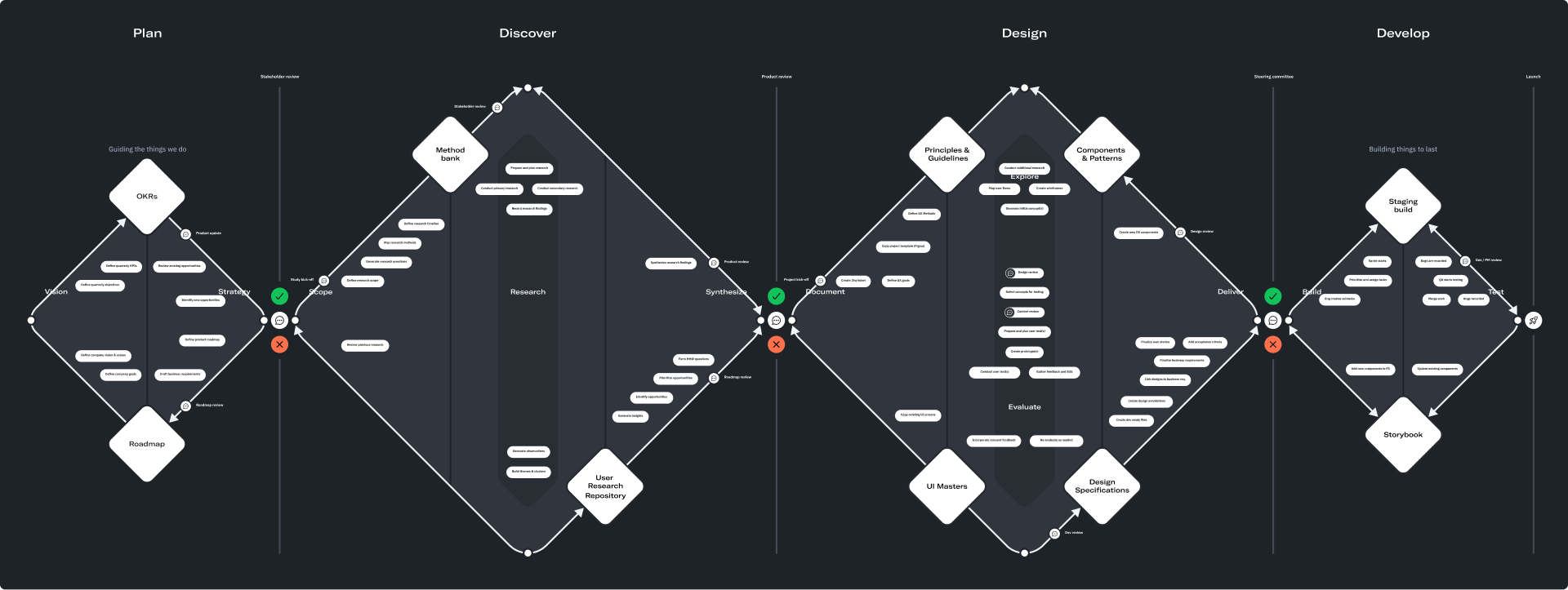
Design process
The first thing I introduced was a project kickoff structure. Before any design work began, the team would align on the problem we were solving, the goals we were working toward, and crucially — what we knew versus what we still needed to find out. Because our team was small, and our research budget was non-existent, it helped us determine where to focus our limited efforts and which methods would drive results.

Figma organization
I also overhauled how we managed our Figma files, introducing a naming and page structure tied directly to Jira tickets. This made it significantly easier to track work across the team and gave engineers clearer context during handoff. Alongside this I began building out platform masters and establishing change management practices for the team.
Design system
In parallel, I started building a lightweight design system iteratively as we shipped. It gave designers a shared set of foundations and components to work from, speeding up execution even if larger patterns and layouts remained a work in progress given the competing demands on the team's time.

Product alignment
Seeing a need for greater alignment across the product team, I led a number of workshops focused on connecting business goals with customer needs and prioritizing the highest value work. This included feature prioritization sessions to cut through competing priorities, and Jobs to be Done and product market fit workshops to pressure test whether our initiatives were genuinely addressing customer pains or simply responding to surface level requests. These sessions helped ground our roadmap decisions in customer reality and ensured design had a seat at the table when it came to shaping direction, not just executing on it.
See vision workshopUberflip Pages
Before Pages, marketers could define the look and feel of their content experiences during onboarding, but any changes after that — moving elements, updating branding, or testing different layouts — required going back through an internal team. That meant submitting a request, getting a quote, waiting for implementation, and going through rounds of QA and approval, a process that could take months. For marketers who needed to move quickly, test ideas, or iterate on their brand, this was a significant barrier. Pages was built to change that.

Discovery and direction
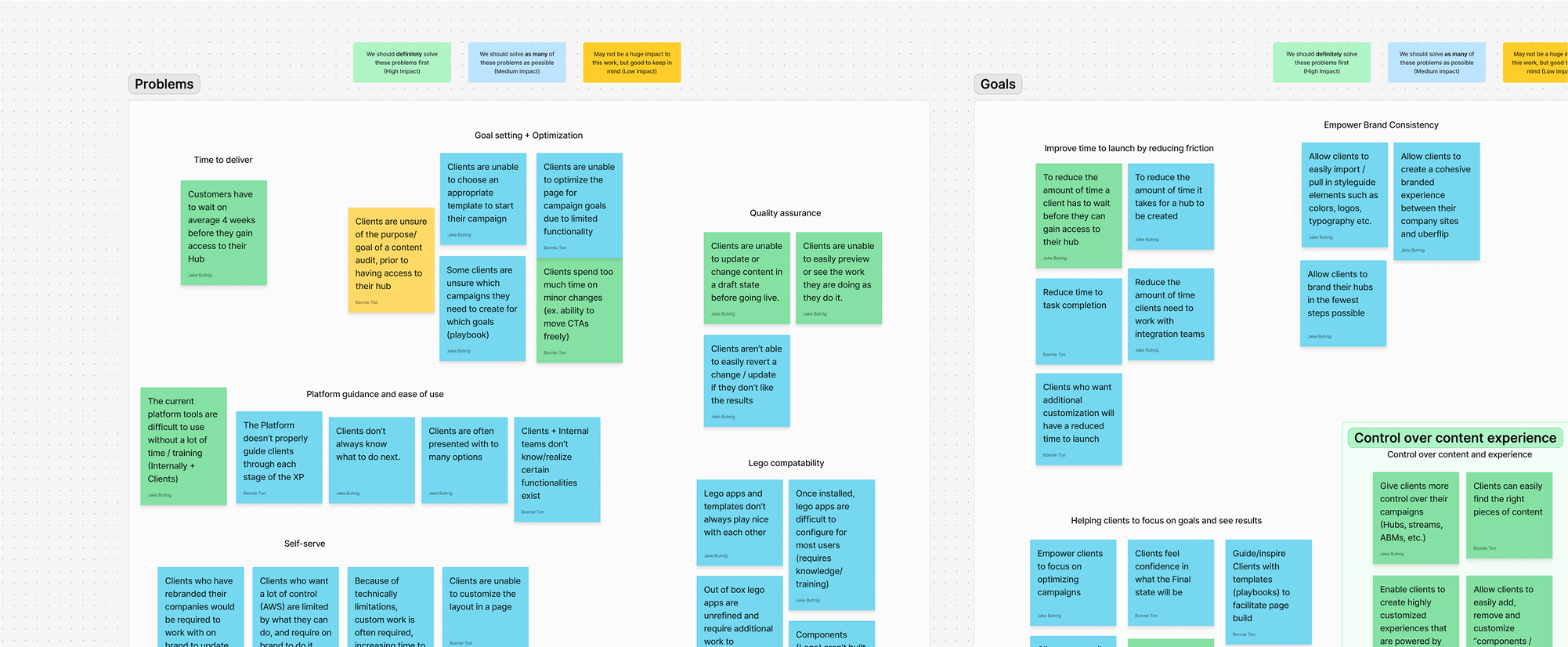
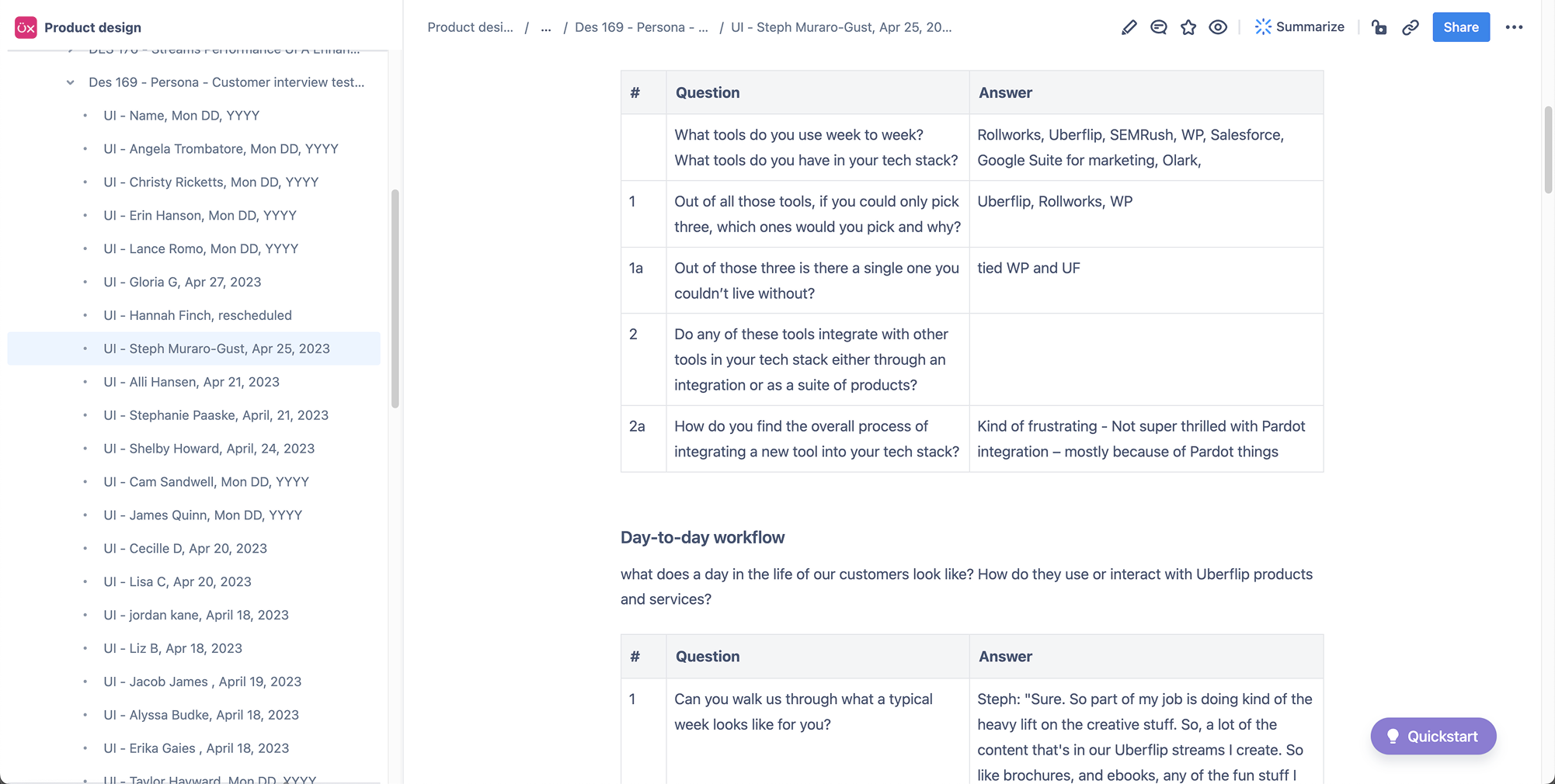
Early direction was shaped by a combination of industry analyst feedback from Forrester, signals from broader market trends around personalization and self-serve tooling, and customer interviews conducted in collaboration with CS and Product. These conversations surfaced consistent themes around the importance of page templates, personalization, and the desire for faster time to value, validating that the investment in Pages was the right strategic bet.
Design process
As the lead designer on the project, I worked with the Pages PM through the full product lifecycle, from initial kickoff through solutioning, design system integration, and dev handoff. Given the complexity of the platform, we took an agile, iterative approach, running structured alpha and beta rollouts that included weekly customer working sessions and SUS scoring to measure usability progress. Pages also gave us the opportunity to move away from the legacy architecture that had accumulated over years, replacing it with a modern, flexible foundation.


Outcomes
Pages launched to strong early adoption with:
- 109 active accounts representing approximately $6M ARR organically adopting the product
- SUS score of 78, above the industry average
Pages also directly contributed to 2 customer saves, helping retain accounts that had been at risk of churning.


Future vision
With Pages establishing a new foundation for the platform, the work shifted toward defining where Uberflip could go next. Working closely with the VP of Product, I was responsible for translating his vision of an all-in-one platform into a bold new direction and unified platform experience. This meant staying closely connected to the business through ongoing collaboration with the VP of Product, using artifacts like analyst decks and board presentations as inputs to understand Uberflip's direction and identify patterns that could shape the platform experience.
Defining the direction
Our approach was to think 1 to 3 years out, using the vision as a tool to work backwards from. We validated direction through Forrester analyst sessions and customer interviews, finding the balance between business goals and user needs. The reception from Forrester was strong, with two principal analysts independently validating the direction.
“This vision aligns perfectly with the Forrester vision of adaptive campaigns.”
Kelvin Gee, Principal Analyst Demand and ABM, Forrester
“This articulates the gap in many of our clients' content execution strategies.”
Phyllis Davidson, Principal Analyst Content Engagement, Forrester
Shaping the roadmap
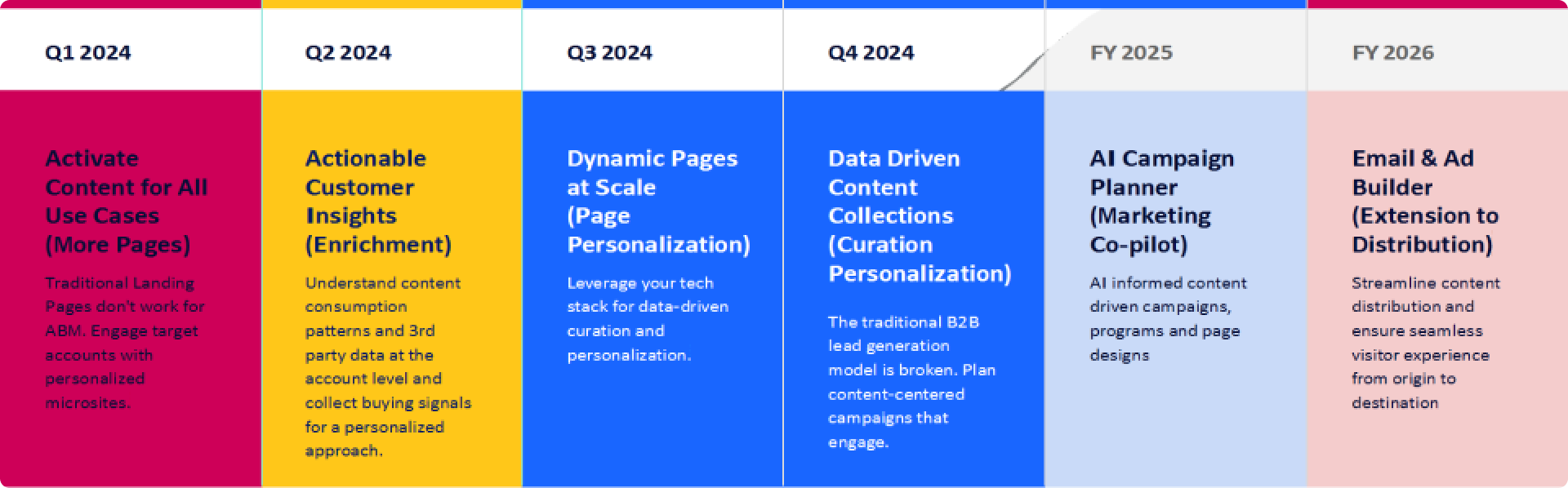
The vision work had a direct influence on the product roadmap, helping inform the different stages and iterations of Pages and providing a north star for how the platform could evolve. It also pushed the build experience to become a more central part of Uberflip, expanding on what Pages had established and pointing toward a more cohesive, all-in-one platform experience. With limited time and resources, the vision gave the team something to rally around and a clear direction to build toward.


Outcome
Despite the momentum built across the design practice, the launch of Pages, and a clear vision for where the platform was headed, the direction of the business shifted. In the summer of 2024, Uberflip was acquired by PathFactory and future product development was put on indefinite hold. Over the following six months I supported minor improvements and helped honor remaining service level agreements made to customers before transitioning to my current role at AgencyAnalytics.
While the full vision was never realized, the work left a meaningful foundation — a modernized product experience, a stronger design practice, and a strategic direction that had been validated by customers, analysts, and the business alike.